
Training
The EFAR System
In an emergency, the first few minutes can be critical. While an ambulance or Community Medics response vehicle is on its way, a trained person nearby may be able to provide appropriate initial care.
This is the principle behind Tier 1 community-based emergency response: equipping local people to assist within their training and defined responsibilities while professional emergency medical services (EMS) provide further assessment, treatment and transport when needed.
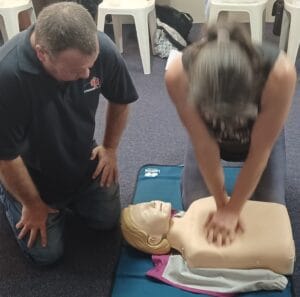
What is a Tier 1 response?
A Tier 1 responder is a trained community member who can respond to an emergency in their local area. Because they live or work nearby, they may be able to reach a patient before a response vehicle or ambulance arrives.
Their role is to assess the situation, provide appropriate basic emergency care, and communicate relevant information to the dispatcher and EMS. When professional responders arrive, they can explain what they observed and what care they provided.
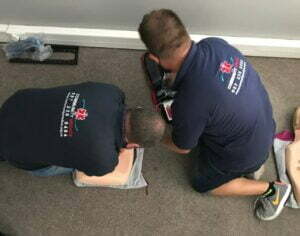
Community Medics and the EFAR Programme
Community Medics offers Emergency First Aid Responder (EFAR) training to people who want to support emergency response in their communities. Our EFAR responders operate within their own geographical blocks, creating a network of trained people across the areas we serve.
The EFAR Programme was developed and implemented by Western Cape Government Health and Wellness Emergency Medical Services and the Western Cape Government College of Emergency Care, in collaboration with academic partners including the University of Cape Town’s Division of Emergency Medicine and Stellenbosch University. Community Medics supports the programme by helping to train and coordinate responders within our communities.
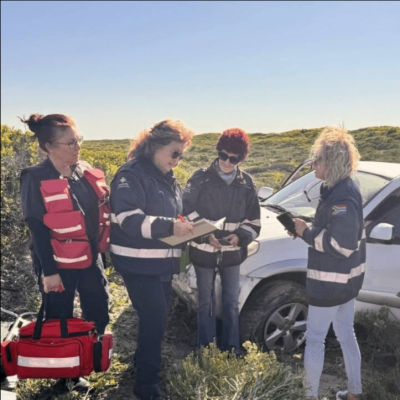
How local responders can help
A nearby EFAR responder may be able to provide care before a response vehicle or ambulance arrives. Depending on the emergency, this could include starting CPR, helping someone who is choking, or controlling serious bleeding. When these interventions are needed, delays until an ambulance arrives can reduce the patient’s chances of survival or recovery.
Responders can also assess and report changes in a patient’s condition, help the dispatcher and EMS understand what is happening, and use their knowledge of local access routes to assist the arriving crew.
A local network is particularly useful when ambulance resources are busy or travelling from further away. Response times will vary according to responder availability, location and the circumstances of the emergency.
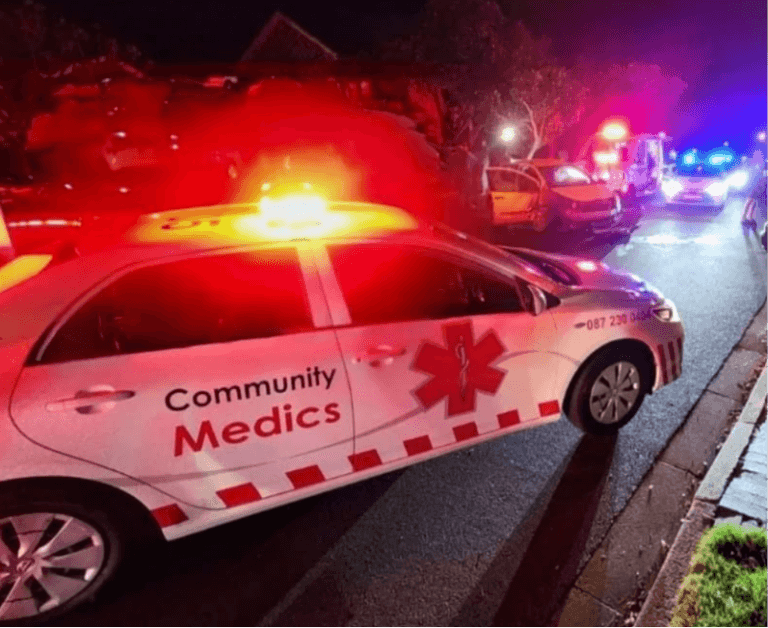
Working alongside professional EMS
When an emergency is reported, our dispatcher requests the appropriate EMS resources while dispatching available Community Medics responders. EFAR responders provide care within their training, recognise when further help is needed, and hand over to the arriving professionals.
About the EFAR course
EFAR is a community responder training programme for people who want to participate in Community Medics’ response network or work with organisations involved in this model.
The course is not accredited by the Department of Employment and Labour (DoL) or the Services SETA, and completion of the course should therefore not be represented as a DoL- or SETA-accredited occupational first aid qualification. If you need first aid certification for work, please check your employer’s requirements and select a course approved for that purpose.
Become a Community Medics EFAR responder
To learn about upcoming EFAR training and how to get involved in your community, contact training@communitymedics.org.za.
For more information about the EFAR system, visit https://www.efarsystem.com/.
Ongoing Training
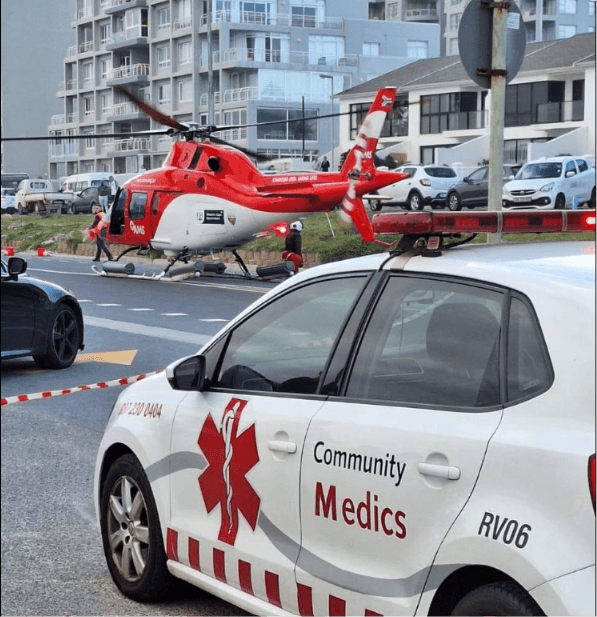
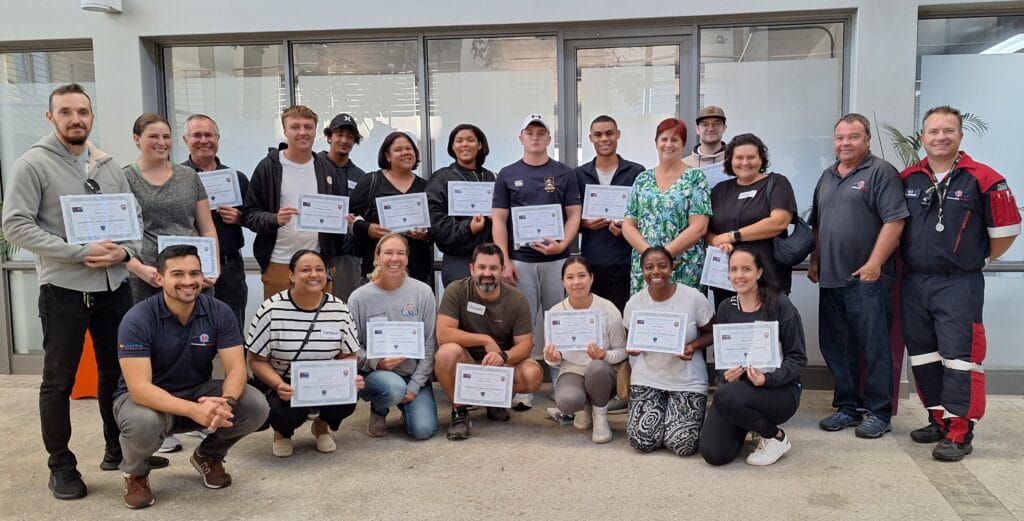
For our team, being at our best is non‑negotiable. That’s why we complete regular refresher training—sharpening the skills needed to respond swiftly and effectively in emergencies.
Ongoing training isn’t just routine, it’s part of who we are. As a community‑based, volunteer‑driven service, this dedication ensures that when our community calls, they receive care that is consistent, capable, and compassionate—every single time.


Community involvement
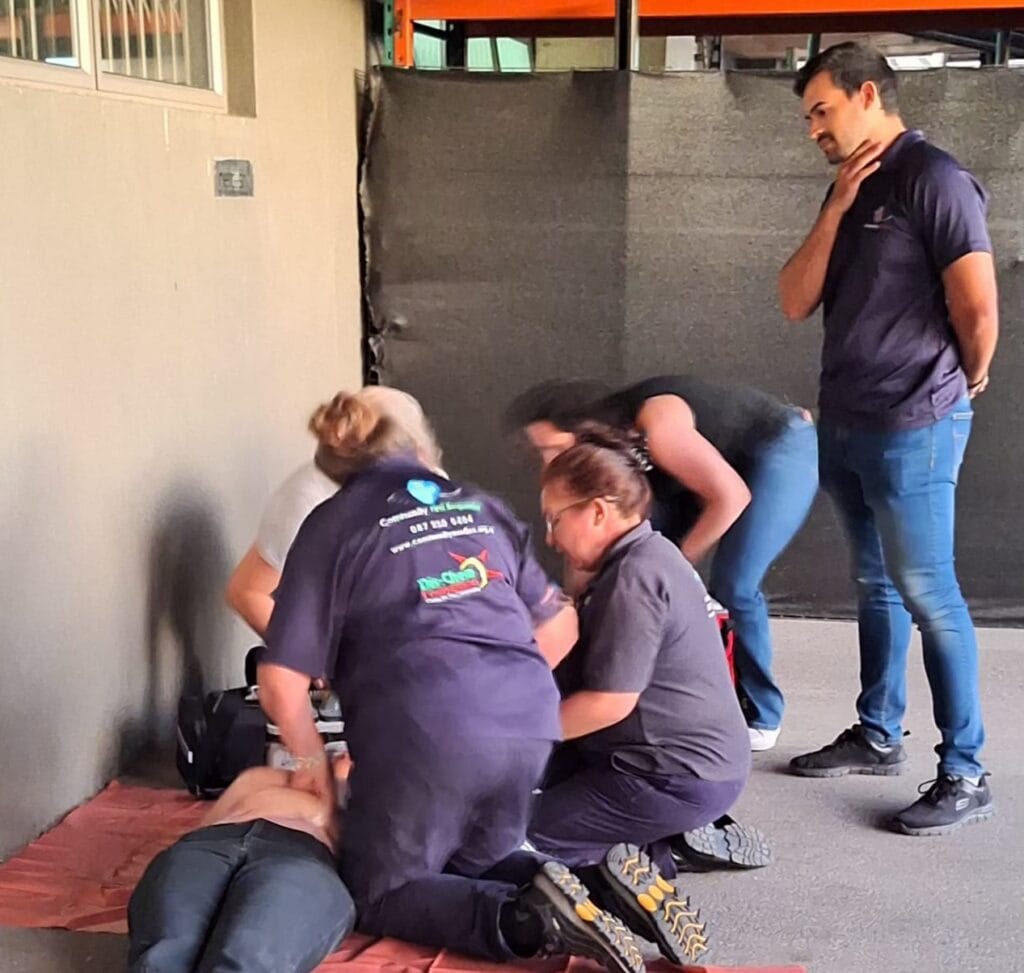
We have good relationships with other local charities and we are actively involved in teaching and training at these organisations and will send our response vehicle to their events.